Every job below is one we do ourselves across Riverside.
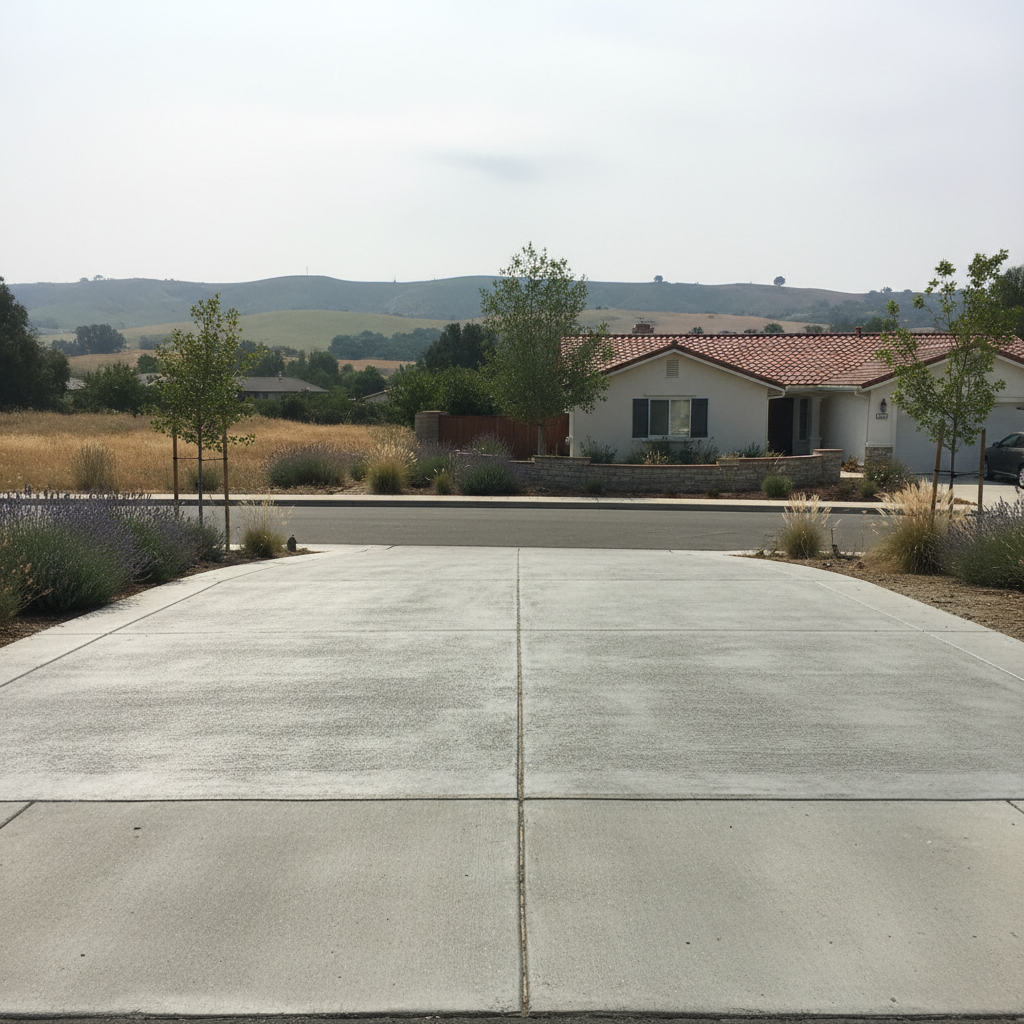
A driveway slab needs a compacted base, usually 4 inches of class II road base, before we ever set forms. We run rebar on 18-inch centers for extra strength under vehicle loads, not just wire mesh, and saw-cut control joints within a day so cracks go where we want them instead of across the middle of your garage approach.
Patio slabs carry less load than a driveway, so we can go lighter on the base and still get a flat, durable surface. We slope every patio a quarter inch per foot away from the house so water doesn't pool against your foundation or siding.
Stamped concrete gets you the look of flagstone, brick or slate without the cost of setting real stone. We lay down color hardener, stamp the pattern while the slab is still plastic, then seal it once it's cured so the color doesn't fade in our sun.
Hairline cracks are usually cosmetic, but a crack with one side higher than the other means the soil underneath moved and that section needs to come out. We patch what can be patched and replace what can't, and we won't talk you into a full tear-out if a partial repair holds.
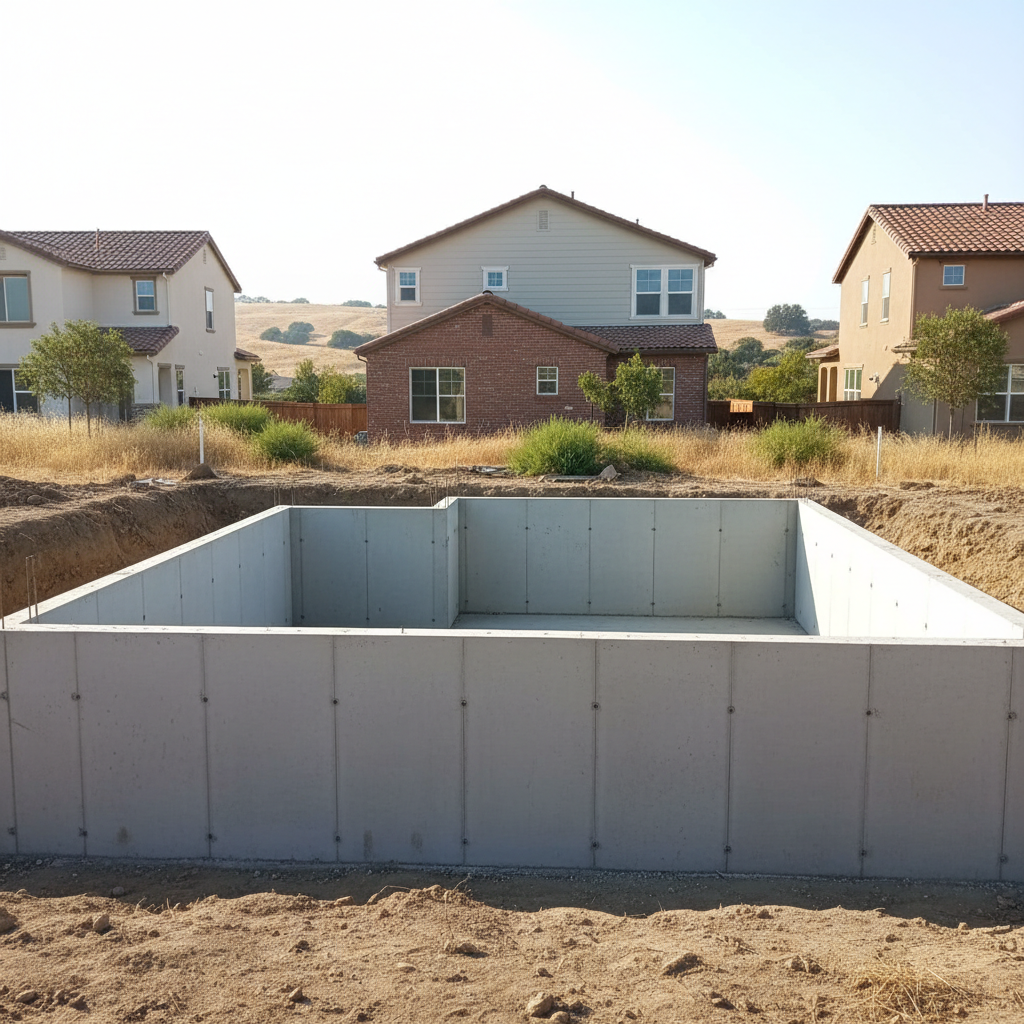
Shed pads, garage slabs and small foundations all start the same way, with proper grading and a vapor barrier if anything living will sit on top of the slab. We check that the soil is compacted to spec before pouring, because a slab poured on loose fill will settle no matter how good the concrete is.
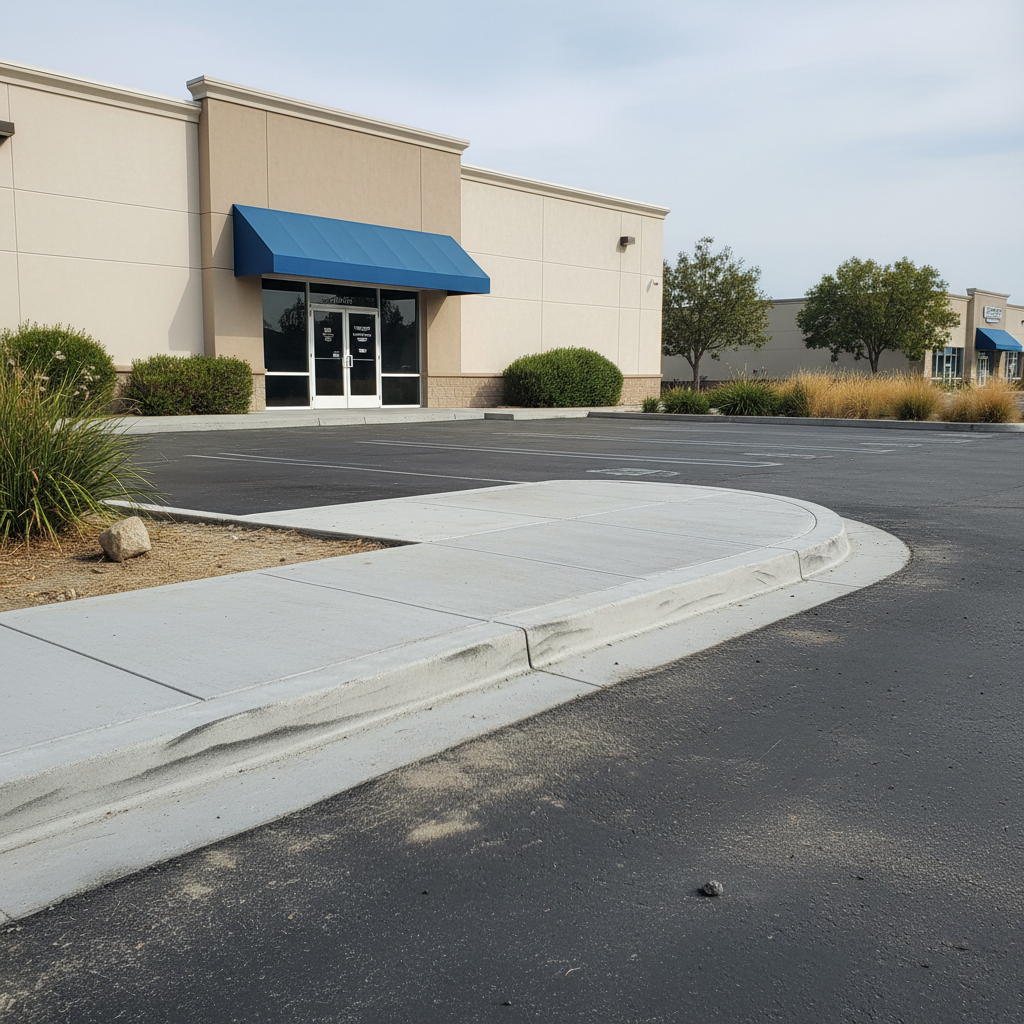
City sidewalks have to meet specific thickness and slope requirements if they're in the public right-of-way, and we pull the permit and pour to that spec. For a private walkway we can run a thinner slab and space joints differently since it's not carrying cars.
Steps get formed and poured in one piece whenever we can manage it, so there's no cold joint between the riser and the tread that ends up looking like two different pours. We check rise and run against code before we set the forms, not after.
We wash back the top layer of cream right after the pour to expose the rock underneath, which gives you a non-slip surface that holds up around pools. It costs more labor than a broom finish because the timing window is narrow, an hour or two depending on the heat.
A retaining wall over about two feet usually calls for engineering and rebar footings, not just stacked block. We size the footing to the soil and the wall height, and we put in weep holes or gravel backfill so water pressure doesn't push the wall over in a wet winter.
Old slabs get broken up, loaded out and hauled to a recycling yard instead of a landfill when the material allows it. If your driveway's cracked into pieces more than six inches apart, it's usually cheaper to demo and repour than keep patching.
Four steps, and no surprises in any of them.
You tell us what you want doing, we look at what is actually there, and we ask the awkward questions early.
In writing, itemised, free. If something might add cost later we flag it now rather than at the end.
Same crew throughout. We cover your floors, keep the dust down and tidy up before we leave each day.
You point out anything you are not happy with and we fix it before the invoice, not after.
Service area for pours, repairs and flatwork.
Questions that come up once a project's underway.
Describe the problem and we will tell you what it probably is. No obligation.