
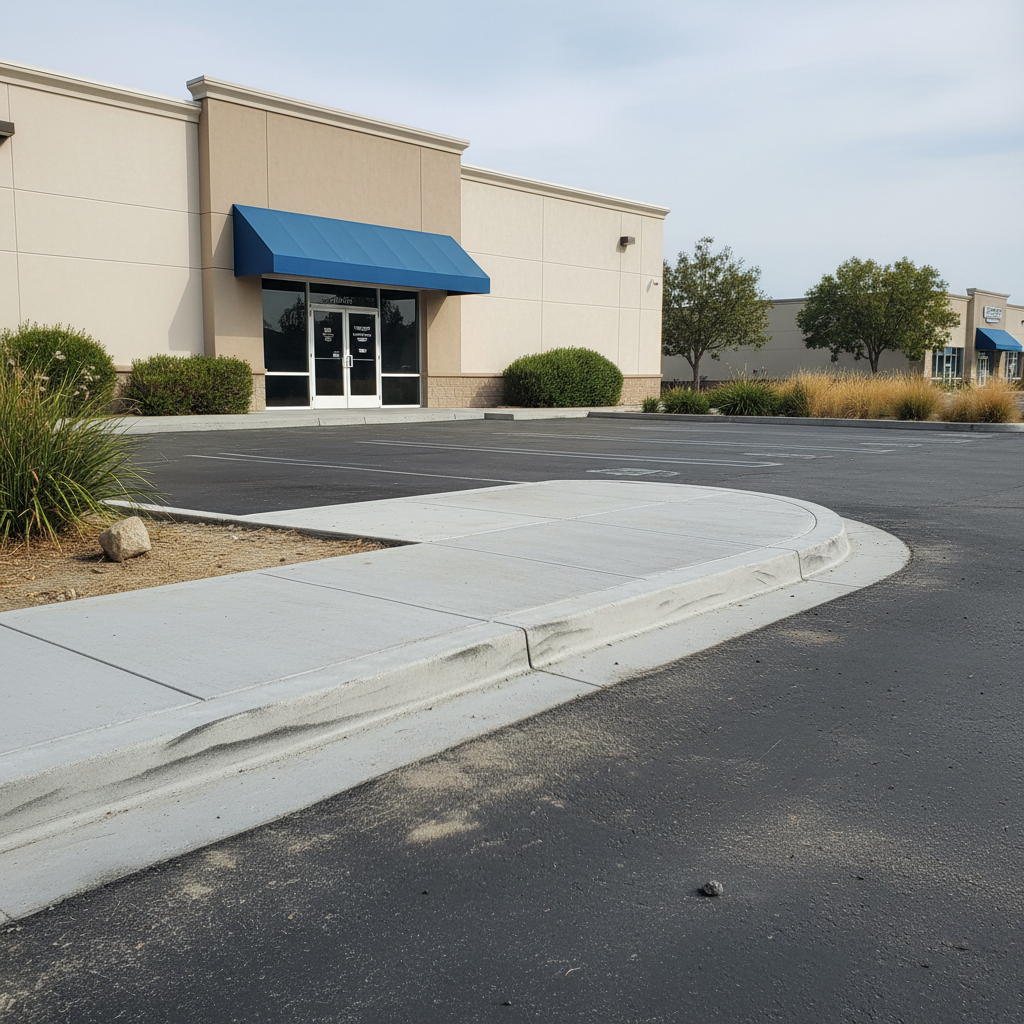
Riverside gets concrete work that most contractors in cooler, wetter states never have to think about. The clay under a lot of older Riverside neighborhoods swells when it's wet and shrinks hard when it dries, and summer afternoons here can sit at 105 degrees for weeks at a time. Both of those things change how concrete has to be placed and cured, and they're exactly the kind of thing that separates a contractor who knows the area from one who's just pouring the same slab he'd pour in Sacramento.
Start with the license, but don't stop there
Any concrete contractor working in California needs a C-8 license through the Contractors State License Board, and you can look up the number yourself on the CSLB website in about thirty seconds. Check that it's active, check that the bond is current, and check for complaints. That's the floor, not the whole decision. A license tells you someone passed a test years ago. It doesn't tell you whether they know that the decomposed granite soil up around Victoria and the Box Springs foothills drains completely differently than the heavier clay down toward the river bottom near Fairmount Park.
Ask for proof of general liability insurance and workers' comp, and ask to see it, not just hear about it. If a crew gets hurt on your property and the contractor isn't covered, that liability can land on you as the property owner.
Ask about the mix, the rebar, and the joints before you ask about price
A driveway or a slab isn't just "concrete." Ask what PSI mix they're using. For a standard residential driveway you want at least 3,500 PSI, and most reputable contractors in this area push to 4,000 for anything that'll carry a vehicle, because our heat accelerates the surface cure and can leave the inside softer than it looks. Ask whether they're using rebar or wire mesh. Mesh is cheaper and fine for a patio, but for a driveway that'll take real weight and sit on soil that shifts seasonally, half-inch rebar on an 18-inch grid holds up better over the long run.
Then ask about control joints. Concrete is going to crack somewhere, that's physics, the only question is whether it cracks where you tell it to or wherever it wants. A contractor who saw-cuts joints within 24 hours of the pour, spaced roughly every 8 to 10 feet for a standard slab, is giving the crack somewhere planned to go. If a bid doesn't mention joint spacing at all, that's a gap worth asking about directly.
What the Riverside ground and weather actually do to a pour
A lot of the older housing stock around the Wood Streets, downtown, and the Mission Inn area was built in the 1900s through the 1940s, often with whatever foundation practices were standard at the time, which means a contractor working a repair or an addition there is often dealing with unknowns in the ground, old footings, buried debris, root systems from mature trees that were already decades old when the house went up. Newer subdivisions out toward Orangecrest, Mission Grove, and the areas pushing toward Moreno Valley sit on more consistent, engineered pads, and the soil's been compacted to a known standard, which makes the prep work more predictable but not necessarily simpler. A good contractor treats these differently. A contractor who quotes the same price and process for both without asking questions about your lot probably hasn't walked enough of them.
Heat is the other local factor that matters more here than almost anywhere else in the state. Concrete needs to cure slowly to reach its full strength, and when it's 100-plus degrees with low humidity and a dry wind, the surface water can flash off faster than the slab can hydrate underneath. That's called plastic shrinkage cracking, and it shows up as fine spiderweb cracks within hours of the pour. A contractor who pours through a Riverside July without covering the slab with curing blanket or wetting it down on a schedule is cutting a corner that'll show up as a cosmetic problem, or worse, within the first year.
Rain is less of a daily concern here than it is elsewhere, our wet season runs roughly December through March, but when it does come it tends to come hard and fast, and Riverside's clay-heavy soil doesn't absorb it quickly. Grading matters more than people think. A patio or driveway poured flat, without at least a quarter inch of fall per foot directing water away from the foundation, will pond. Ask where the water's supposed to go before the forms ever get built.
Permits, and why the contractor who skips them is a red flag
Most residential concrete work in the city of Riverside, driveway approaches, structural slabs, retaining walls over a certain height, goes through the city's Building & Safety division, and out in unincorporated areas like parts of Woodcrest or Mead Valley it runs through Riverside County instead. An inspector typically checks the sub-grade compaction and rebar placement before the pour, and sometimes checks forms and drainage after. A contractor who tells you permits aren't necessary for a driveway or a retaining wall is either wrong or hoping you won't ask twice. Skipping the permit might save a few days and a few hundred dollars up front, but it can come back on you at resale when a buyer's inspector asks for permit history and there isn't one.
If you're in one of the newer tracts with an HOA, which is common around Orangecrest and Victoria Grove, check your architectural guidelines before you commit to a stamped pattern or a wall height. HOAs in this area often have specific rules about driveway finishes and retaining wall materials visible from the street, and it's a lot cheaper to find that out before the pour than after.
What should make you walk away
A bid that's dramatically lower than the others usually means thinner slab, no rebar, or a mix that's been watered down on site to make it easier to pour, which weakens it. Ask for the PSI and the depth in writing. A contractor who wants full payment up front, in cash, with no contract, is a contractor you have very little recourse against if something goes wrong. And if nobody on the crew can tell you how many days before you can drive on a new driveway, that's worth noting. The honest answer is usually 7 days for foot traffic and closer to 28 days before it's at full strength for a vehicle, though most residential mixes are safe for cars around day 7 to 10 depending on the weather during cure.
None of this is complicated once you know to ask. It just takes asking before the truck shows up, not after. Everstone Concrete Solutions works through these same questions with homeowners across Riverside and the surrounding towns, and we're glad to walk a lot and talk through what it actually needs before any concrete gets mixed.